Skip to main navigation menu Skip to main content Skip to site footer

Western Nigeria Journal of Medical Sciences

About

WNJMS is published by UNIOSUN Teaching Hospital, Osun State, Nigeria (the training institution of Osun State University, Osogbo, Nigeria). The journal is a peer-reviewed, open-access publication of scholarly research in all fields of medical and health profession.

Read More

Current Issue

Volume 9, No. 1Western Nigeria Journal of Medical Sciences

Published June 30, 2026

Case Report

  1. A proposed new nomenclature in clinical diagnosis from an old culprit: Empyema Thoracis Abdominis

    Introduction

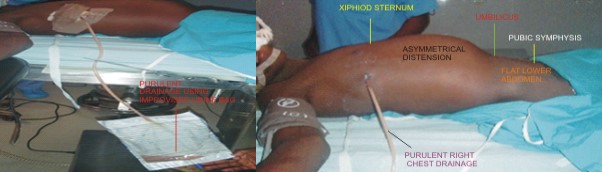
    We report a unique case of blunt torso trauma resulting from repeated punches during a fight, which caused right hemidiaphragmatic rupture complicated by empyema involving both the thoracic and abdominal cavities. To describe this unusual pathological communication, we propose the term empyema thoracisabdominis.

    Case Report

    A patient who sustained blunt abdominal trauma from repeated punches during a fight resulting in right diaphragmatic rupture is presented. Clinical findings, laboratory investigations, imaging studies, operative findings, and postoperative observations were reviewed from the patient's case records. The diagnosis of empyema communicating between the thoracic and abdominal cavities was established from the combined clinical and intraoperative findings.

    An unusual abdominal asymmetry was observed, characterised by distension of the upper abdomen above the umbilicus while the lower abdomen remained relatively flat. Operative findings demonstrated empyema extending between the thoracic and abdominal cavities through a traumatic rupture of the right hemidiaphragm.

    Conclusion

    This case demonstrates an unusual communication of empyema between the thoracic and abdominal cavities through a traumatic diaphragmatic rupture. Based on the Greek derivation of the word empyema and the anatomical distribution observed in this patient, the descriptive term empyema thoracisabdominis is proposed.
Case Series

  1. Reverse Posterior Interosseous Artery Flap: Early Experience in a Tertiary Hospital in Sub-Saharan Africa

    Introduction

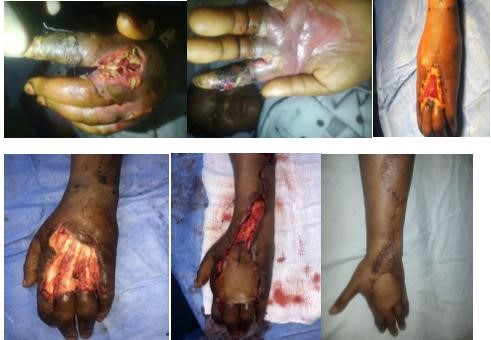
    The reverse posterior interosseous artery (rPIA) perforator flap is a well-established option for the reconstruction of hand defects proximal to and involving the metacarpophalangeal joints (MCPJs). Its ease of dissection, reliability, single-stage reconstruction, versatility, and facilitation of early functional rehabilitation have made it an attractive reconstructive option. We report our early experience with the rPIA perforator flap in the reconstruction of hand defects in a tertiary hospital in sub-Saharan Africa.

    Methods

    Demographic and relevant clinical data were retrieved retrospectively from the case records of patients who underwent reconstruction using the rPIA flap between June 2019 and May 2024. Data are presented as a case series.

    Results

    Four patients aged 30–45 years underwent reconstruction of various hand defects using the reverse posterior interosseous artery perforator flap over the five-year study period. Three patients were male and one was female. All defects in the male patients resulted from trauma, whereas the female patient presented with a neglected diabetic hand infection. All flaps survived, although one patient developed marginal distal flap necrosis that healed without additional surgery. No patient required secondary reconstructive procedures.

    Conclusion

    The reverse posterior interosseous artery flap is a feasible, reliable, and effective reconstructive option for appropriately selected hand defects in our environment. Careful patient selection, meticulous flap planning, and precise surgical dissection are essential for achieving favourable outcomes.

Review Article

  1. Educate and Act Now: Empowering Healthcare Professionals, Students, and Communities to Combat Antimicrobial Resistance

    Introduction

    Antimicrobial resistance (AMR) is a major global public health threat driven by inappropriate antimicrobial use, weak stewardship systems, and poor awareness among healthcare providers and the public. Addressing AMR requires coordinated action across healthcare professionals, students, and communities. To highlight strategies for empowering healthcare professionals, students, and communities to strengthen antimicrobial stewardship and combat antimicrobial resistance.

    Methods

    This article is a narrative review of published literature, policy documents, and global reports on antimicrobial resistance, antimicrobial stewardship, and educational and community-based interventions aimed at improving antimicrobial use. Evidence was synthesised to identify effective approaches for AMR education, advocacy, and behavioural change.

    Results

    Healthcare professionals play a central role in antimicrobial stewardship through rational prescribing, patient education, infection prevention, and multidisciplinary collaboration. Students contribute through early curricular exposure, peer education, research participation, and advocacy activities. Community engagement remains essential for reducing self-medication, improving adherence, and promoting awareness through culturally appropriate interventions, including school-based programmes, media campaigns, and involvement of community leaders. Innovative approaches such as digital health tools, behavioural science interventions, and intersectoral collaboration further strengthen AMR education and advocacy.

    Conclusion

    Combating antimicrobial resistance requires a multisectoral approach involving healthcare professionals, students, and communities. Strengthening education, stewardship programmes, behavioural change strategies, and innovative communication tools is essential to preserve antimicrobial effectiveness and improve global health outcomes.

Original Article

  1. Breast Necrotizing Fasciitis: Experience from a Resource-Limited Setting

    Introduction

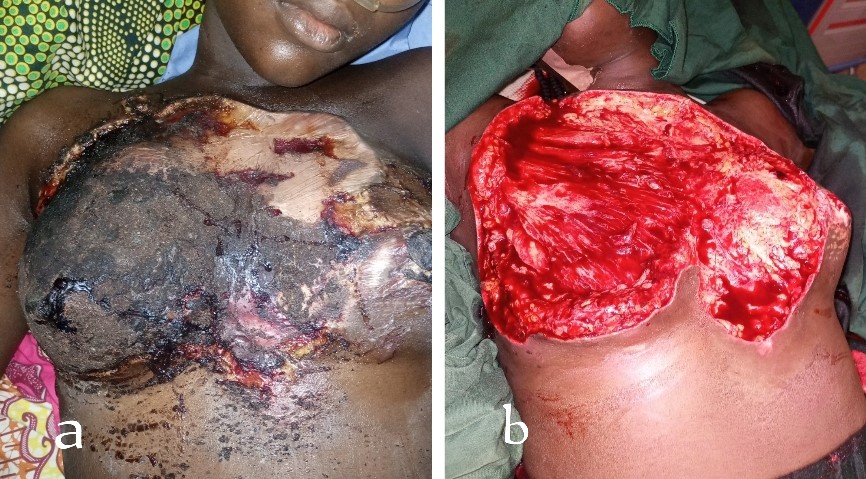
    Necrotizing fasciitis of the breast is an uncommon but life-threatening soft tissue infection that may occur following breast surgery or inadequately treated mastitis. Delayed diagnosis and treatment can result in extensive breast tissue and skin necrosis, severe sepsis, and significant morbidity. This paper describes the clinical presentation, management, and outcomes of breast necrotizing fasciitis in a resource-limited setting and highlight the challenges associated with its management.

    Methods

    This retrospective study reviewed the records of women managed for breast necrotizing fasciitis between January 2019 and December 2023. Demographic characteristics, clinical presentation, microbiological findings, treatment, complications, and outcomes were analysed using descriptive statistics.

    Results

    Twenty-six women with a mean age of 27 years were managed during the study period. Most were married, unemployed housewives, and developed necrotizing fasciitis secondary to lactational mastitis (73.1%). All patients presented with ulcerated breast swelling, foul-smelling discharge, and skin necrosis, while breast tissue necrosis occurred in 38.5%. Bilateral breast involvement was observed in 42.3% of patients. Staphylococcus aureus was the commonest organism isolated (34.6%). All patients underwent repeated surgical debridement, with mastectomy performed in five (19.2%) and split-thickness skin grafting in six (23.1%). The mean hospital stay was 22 days, and no mortality was recorded.

    Conclusion

    Breast necrotizing fasciitis is associated with considerable morbidity, particularly among young women of reproductive age. Early diagnosis, prompt surgical intervention, and appropriate supportive care are essential to minimise complications and improve outcomes.

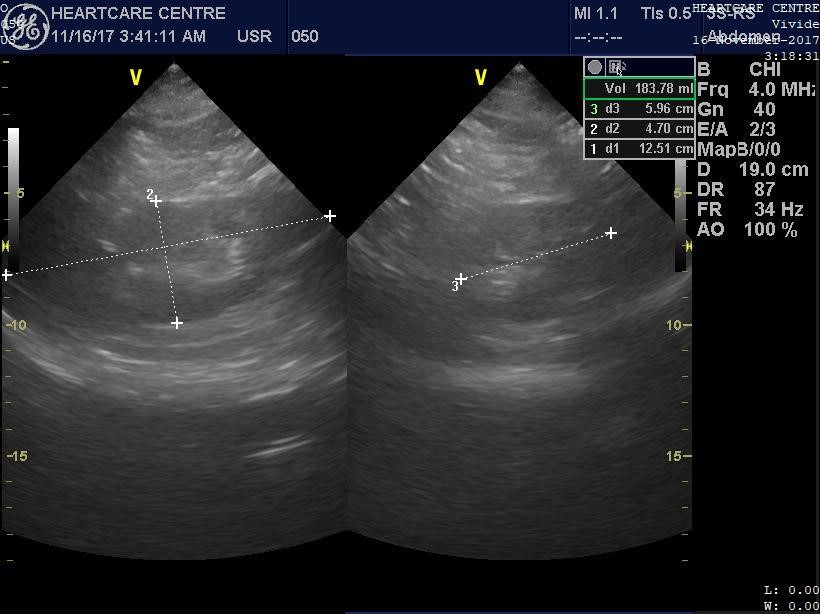
  2. Kidney Ultrasonographic Findings and Their Relationship with Renal Arterial Resistive Index among Adults Living with Human Immunodeficiency Virus in Southwestern Nigeria

    Introduction: Kidney involvement is a common complication of human immunodeficiency virus (HIV) infection and contributes significantly to morbidity and mortality. This study evaluated renal ultrasonographic findings and their relationship with the renal arterial resistive index (RI) among adults living with HIV.

    Methods: This hospital-based comparative cross-sectional study included 100 adults living with HIV and 100 age- and sex-matched apparently healthy controls. All participants underwent renal ultrasonography to assess renal dimensions, parenchymal echogenicity, renal arterial RI, and other renal abnormalities. Correlations between renal size, echogenicity, and RI were analysed using appropriate statistical methods, with statistical significance set at p < 0.05.

    Results: Renal ultrasonography demonstrated normal, enlarged, and shrunken kidneys among participants with HIV. Increased renal RI was observed in 73.0% of participants, while increased renal parenchymal echogenicity was present in 77.0%. Other sonographic abnormalities included globular kidney, loss of corticomedullary differentiation, and simple renal cysts. A weak positive correlation was observed between renal size, renal parenchymal echogenicity, and RI. The strongest correlation was between right renal length and RI (r = 0.29, p = 0.003), whereas correlations involving other renal parameters were weak and not statistically significant.

    Conclusion: Adults living with HIV demonstrate diverse renal ultrasonographic abnormalities, including altered renal size, increased renal echogenicity, and elevated renal arterial resistive index. Although the correlations between these parameters were generally weak, renal ultrasonography, particularly assessment of renal arterial RI, may provide valuable information for the early detection and monitoring of HIV-associated renal disease.

  3. Pattern and Early Outcome of Burn Injuries Among Children Managed at a Teaching Hospital in Ekiti State, Nigeria

    Introduction

    Burn injury is a major cause of morbidity and mortality among children, particularly in low- and middle-income countries. Despite being largely preventable, it remains a significant public health problem. This study determines the pattern, management, and early outcomes of burn injuries among children admitted to a teaching hospital in Ekiti State, Nigeria.

    Methods

    This retrospective descriptive study reviewed the records of children aged below 18 years admitted with burn injuries between January 2015 and December 2019. Information on sociodemographic characteristics, burn patterns, aetiology, management, duration of hospitalisation, complications, and treatment outcomes was extracted and analysed using descriptive and inferential statistics. Statistical significance was set at p < 0.05.

    Results

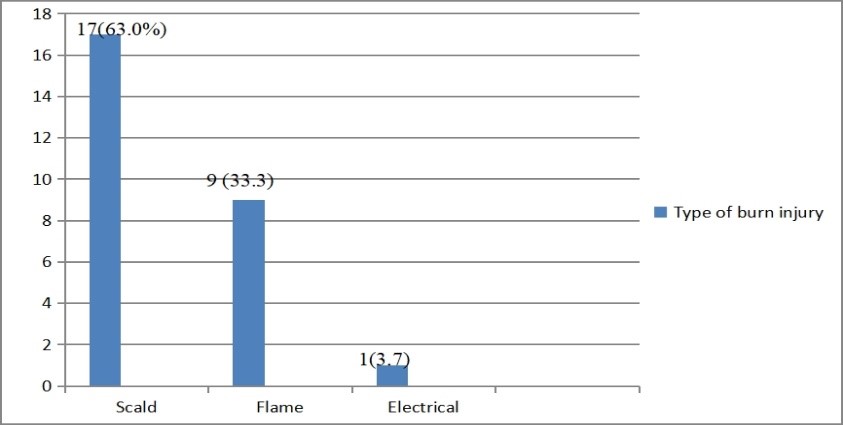
    Twenty-seven children were admitted with burn injuries, representing 0.4% of paediatric admissions during the study period. The median age was 24 months, and males predominated (59.3%). Scald injury was the commonest type of burn (63.0%), followed by flame burns (33.3%) and electrical burns (3.7%). Most injuries occurred at home (96.3%) and were unintentional (96.3%). Eighteen (66.7%) patients were discharged, seven (25.9%) were discharged against medical advice, one (3.7%) died, and one (3.7%) was referred. Patients with burns involving 21–50% of the total body surface area had significantly longer hospital stays (p = 0.03) and poorer outcomes (p = 0.02).

    Conclusion

    Childhood burn injuries were predominantly unintentional scald injuries occurring at home among children aged two years and below. Strengthening caregiver education, improving home safety, and expanding health insurance coverage may reduce the burden of childhood burns.

  4. Awareness, Knowledge, and Attitude Towards Corneal Donation Among Adults in a Rural Community in Enugu State, Nigeria

    Introduction: Corneal blindness remains a major cause of visual impairment in developing countries. Corneal transplantation is an effective treatment for many corneal diseases; however, the shortage of donor corneas remains a major challenge. This study determines the awareness, knowledge, and attitude towards corneal donation among adults in a rural community in Enugu State, Nigeria.


    Methods: This descriptive cross-sectional study was conducted among adults aged 18 years and above who attended a medical outreach programme in a rural community in Enugu State. Data were collected using a structured interviewer-administered questionnaire assessing socio-demographic characteristics, awareness, knowledge, and attitude towards corneal donation. Data were analysed using the Statistical Package for the Social Sciences (SPSS) version 23.0. Descriptive statistics were used to summarize the findings.


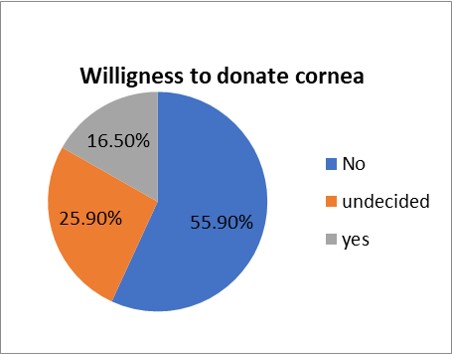
    Results: A total of 170 participants were enrolled, comprising 47 (27.6%) males and 123 (72.4%) females, with a mean age of 48.3 ± 17.2 years. More than half of the respondents (57.1%) had poor knowledge of corneal donation, while 79.4% demonstrated poor awareness. Furthermore, 135 (79.4%) participants were unaware that individuals could voluntarily pledge to donate their corneas after death. Attitude towards corneal donation was generally poor, with 83.5% of respondents unwilling to donate their corneas after death.


    Conclusion: Knowledge, awareness, and attitude towards corneal donation were generally poor among adults in this rural community. Community-based health education and sustained public enlightenment campaigns are needed to improve awareness, correct misconceptions, and promote acceptance of corneal donation.

  5. Clinical characteristics and predictors of mortality among patients with severe COVID-19 admitted to an Intensive Care Unit in Lagos, Nigeria

    Introduction:
    Coronavirus disease 2019 (COVID-19) remains an important cause of severe illness and mortality worldwide. Patients requiring intensive care frequently have underlying comorbidities and multiple organ dysfunction, which adversely influence clinical outcomes. This study evaluated the clinical characteristics, laboratory findings, and predictors of mortality among patients with severe COVID-19 admitted to an intensive care unit (ICU) in Lagos, Nigeria.

    Methods:
    This retrospective descriptive study reviewed the medical records of adult patients with confirmed COVID-19 admitted into the ICU of First Cardiology Consultants Hospital, Lagos. Demographic characteristics, clinical features, comorbidities, laboratory parameters, and treatment outcomes were extracted and analysed using SPSS version 25. Factors associated with mortality were assessed using appropriate statistical tests and multivariable logistic regression. Statistical significance was set at p <0.05.

    Results:
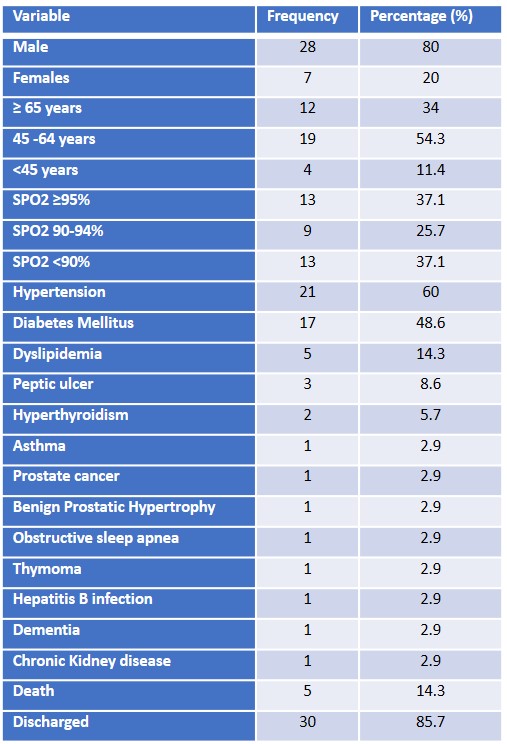
    Thirty-five patients were included, comprising 28 (80.0%) males and 7 (20.0%) females, with a mean age of 58.4 ± 13.5 years. Hypertension (60.0%) and diabetes mellitus (48.6%) were the commonest comorbidities. Overall mortality was 14.3%. Non-survivors were significantly more likely to have tachycardia, hypertension, hypoxaemia, renal dysfunction, hepatic dysfunction, elevated C-reactive protein, elevated D-dimer, and impaired renal function. Multivariable analysis identified tachycardia as an independent predictor of mortality (p=0.031).

    Conclusion:
    Severe COVID-19 requiring intensive care was associated with a high burden of comorbidities and organ dysfunction. Tachycardia emerged as an independent predictor of mortality, while hypoxaemia, hypertension, renal dysfunction, and hepatic dysfunction were significantly associated with poor outcomes. Early identification and aggressive management of these high-risk features may improve survival among critically ill patients with COVID-19.